

The connotation should not be used as a slur because Tom was a noble, kind-hearted man who protected others.
He was not humiliatingly subservient or deferential to white people.
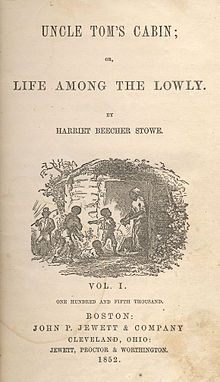
Uncle Tom’s Cabin; or, Life Among the Lowly is an anti-slavery novel by American author Harriet Beecher Stowe. Published in two volumes in 1852, the novel had a profound effect on attitudes toward African Americans and slavery in the U.S., and is said to have “helped lay the groundwork for the [American] Civil War”.
Uncle Tom (should have been Mr. Tom) is a slave who uses nonresistance and gives his life to protect others who have escaped from slavery. When trying to protect the life of Little Eva, he wouldn’t tell the location of the runaway slave to the overseer–Sambo who beats him to death.
There is a real person underpinning the tale: Josiah Henson. Rev. Josiah Henson was born into slavery in La Plata, Maryland, and auctioned off as a child to pay for his owner’s debts.
When someone says, “Uncle Tom”, they mean a Black person who is overeager to win the approval of whites (as by obsequious behavior or uncritical acceptance of white values and goals). The phrase is used wrongly because Tom is not overly subservient to whites, he is a kind-hearted man.
In many African American communities “Uncle Tom” is a slur used to disparage a black person who is humiliatingly subservient or deferential to white people. Derived from Stowe’s character, the modern use is a perversion of her original portrayal.
Being kind to any race shows a positive noble trait which is the key to success when your surroundings seem dark!

